Description
Given a binary tree, determine if it is height-balanced.
Example 1:
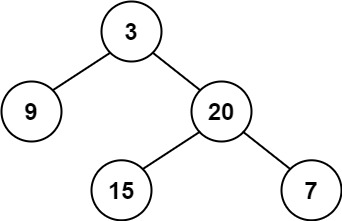
Input: root = [3,9,20,null,null,15,7] Output: true
Example 2:
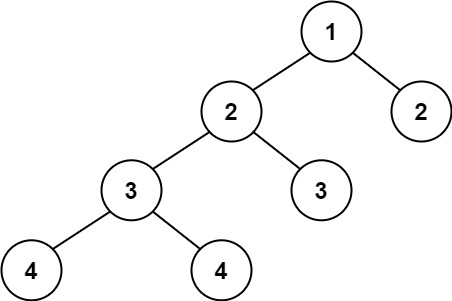
Input: root = [1,2,2,3,3,null,null,4,4] Output: false
Example 3:
Input: root = [] Output: true
Constraints:
- The number of nodes in the tree is in the range
[0, 5000]. -104 <= Node.val <= 104
Solutions
This solution uses the same sentinel value approach but with more explicit variable names (l and r instead of inline expressions) and checks, making the logic slightly more readable. The dfs function short-circuits by checking if the left subtree is unbalanced before processing the right, then validates that the height difference doesn't exceed 1; overall, it achieves the same efficiency as the optimized versions but prioritizes code clarity.
Language: javascript(2026-02-08 10:43)DONE
CPU Performance100.00%
Memory Performance16.23%
/**
* Definition for a binary tree node.
* function TreeNode(val, left, right) {
* this.val = (val===undefined ? 0 : val)
* this.left = (left===undefined ? null : left)
* this.right = (right===undefined ? null : right)
* }
*/
/**
* @param {TreeNode} root
* @return {boolean}
*/
var isBalanced = function(root) {
const dfs = (node) => {
if (!node) return 0;
const l = dfs(node.left);
if (l === -1) return -1;
const r = dfs(node.right);
if (r === -1) return -1;
const diff = Math.abs(r - l);
if (diff > 1) return -1;
return Math.max(l, r) + 1;
};
return dfs(root) !== -1;
};